
August 9 was the International Day of the World's Indigenous People. It came and went without much fanfare. And yet the work continued… thanks to the grassroots organizations that meaningfully work for the good of Indigenous communities. We wanted to start this newsletter with an invitation to remember that contributions to change don't stop being real just because it didn’t come with a massive marketing budget.
This got us thinking about the perceived gap between micro and macro. We think about the artist reimagining what a monument means to their block, the teacher figuring out what one specific student needs to feel safe, or the public servant who spends five years building something whose value may not be fully visible for another ten. Things that often get left out a quarterly report. All of it is the actual work.
So this month, before we get to our own updates, we're asking: who inspires you on the micro level, even when the macro world hasn't caught up yet?
Here's what's been unlocking for us:
Our SFAC short film is screening in September! The Shaping Legacy Artist Circle short film we produced with the San Francisco Arts Commission is screening at San Francisco Public Library on September 2 at 6PM. Sixteen Bay Area artists across four community partners spent a season reimagining what public monuments and memorials could be: sites of healing, not just history. Sincere thanks to Angela Carrier at San Francisco Arts Commission for inviting us to witness this work, and to the film’s director Nicole Nelson for bringing these artists’ stories together so beautifully.
We're kicking off with Wu Yee Children's Services. New partnership alert: we're supporting the Wu Yee team to lead more inclusive learning communities, building on the work they already do meeting every child, including kids with IFSPs and IEPs, exactly where they are. This is the kind of work that doesn't make headlines but changes what a classroom feels like for a four-year-old and their family.
A goodbye that's really a thank-you. Zulma Maciel just wrapped five years as the inaugural Director of San José's Office of Racial and Social Equity, a role she built from scratch. Our co-founder Ellie worked alongside her ORSE team through some of the hardest years for public-sector equity work, and said it best: "You built things that last, and will last."
Click the following link if you’re interested: I'm REDI to work with TJC
Companies that stuck to their DEI values were not defeated.
They warned "go woke, go broke." But the data came back and “broke” never showed up…
New research amplified in The Guardian this month did what some boycotts have spent three years trying to prevent: checked the math. Jacob Grumbach, a UC Berkeley associate professor and researcher, tracked how S&P 500 companies actually performed in the market after Trump's January 2025 executive order threatening companies that kept DEI policies. The companies that held the line (Costco, Apple, Delta) did just as well financially as the ones that folded. In the days right after the order, the holdouts even edged ahead.
Let that sit for a second. Google, Goldman Sachs, McDonald's, Walmart scrapped their DEI commitments anyway. Not because they had data that told them to, but because they cowered to a wanna-be dictator’s folly.
We've said it before and this study just handed us the receipts: the backlash was never really about performance. It was about who gets to decide whose belonging is negotiable.
As we head into fall budget planning season, we're holding three things:
Fear is not a strategy. The companies that pulled back weren't following data, they were following a narrative. TJC has watched leaders make the same mistake with equity work internally: reacting to the loudest voice in the room instead of the evidence in front of them.
Being on the right side of history is a choice. Costco and Apple didn't hold their DEI policies by accident. Somebody in those buildings decided the mission mattered more than the noise. That's a leadership decision available to every organization in this newsletter's inbox, not just the S&P 500.
Choosing not to stand up for what’s right has a cost. Target found this out the hard way when the Twin Cities Pride parade dropped them as a sponsor after they walked back their policies. Caving to one pressure campaign doesn't make you safe. It just tells us what you really believe is worth fighting for.
All studies have limitations, but we’re locked in on this message: You won't fall apart when you refuse to bend to unsupported threats. You lose more when you cater to cowards and call it “strategy”. Costco, Apple, and Delta didn't get lucky - they got clear. Way too many of their peers in corporate America folded to a bluff (which is this administration’s whole game plan). As they say: Stand for something, or you'll fall for anything.
Read: the Guardian reporting then ask yourself: what's your organization holding onto out of evidence, and what's it holding onto out of fear?
Organizations Doing the Work and Opportunities to Plug In
Every month we shine a light on community organizations moving with purpose. Because August 9 was the International Day of the World's Indigenous People, we're spotlighting three Indigenous-led organizations building power in their communities.
NDN Collective
NDN Collective is an Indigenous-led organization based in Rapid City, South Dakota, working to build Indigenous power through organizing, grant-making, and advocacy. Their LANDBACK campaign pushes for the return of land to Indigenous nations. Their work spans climate justice, economic development, and community organizing across Indigenous communities nationwide.
Visit ndncollective.org to connect and give →
Native American Rights Fund (NARF)
NARF is a national legal organization providing legal representation and technical assistance to Native American tribes, organizations, and individuals on issues including tribal sovereignty, treaty rights, natural resources, and voting rights. Based in Boulder, Colorado, NARF has been doing this work for decades.
Visit narf.org to support and learn →
Native American Disability Law Center (NADLC)
NADLC is a nonprofit legal advocacy organization based in Farmington, New Mexico, providing legal services and advocacy for Native Americans with disabilities, with a focus on tribal communities across the Southwest. Their work includes special education advocacy, disability rights, and access to services on tribal lands.
Visit nativedisabilitylaw.org to support and learn →
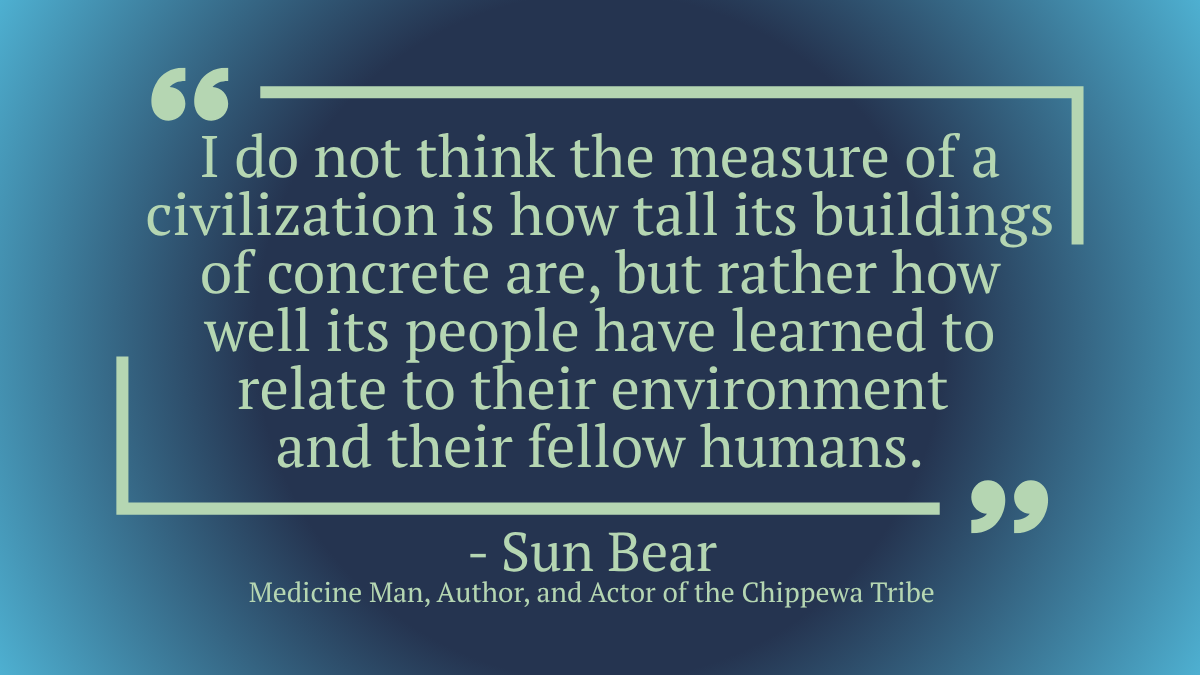
A word for encouragement for anyone wrestling with hard calls about their own business right now: we see you. The economy is forcing a lot of good people to choose between staying independent and joining forces with someone else. If you've decided you might do more in community with others than you could alone, we salute you. Sometimes the most values-aligned move is knowing when to link arms.
If you're interested in working with us, please reach out. And make sure you're following us on LinkedIn for more frequent updates on our work!